The Quiet Table: Why America's Most Discerning Diners Are Choosing Simplicity Over Spectacle
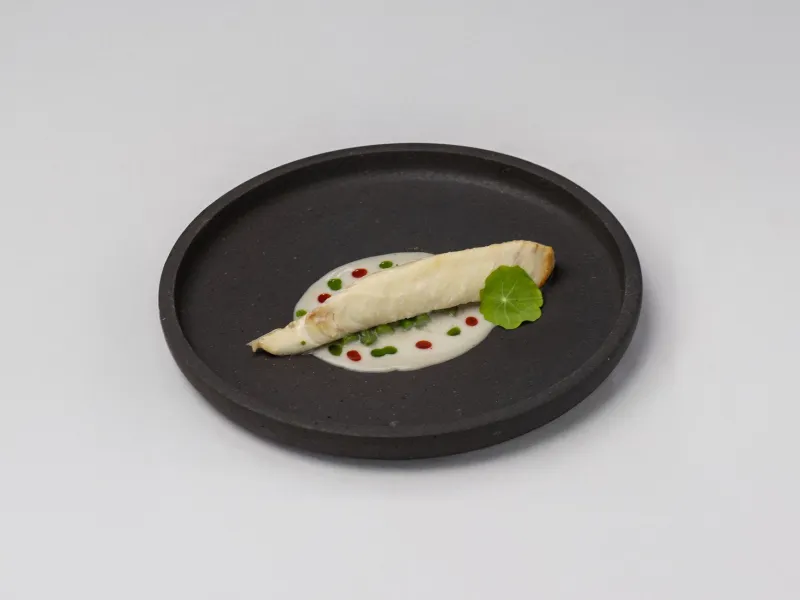
For much of the past two decades, the architecture of fine dining in America has been defined by accumulation. Fourteen courses. Liquid nitrogen. Edible soil. Menus that read less like dinner and more like a graduate thesis in molecular gastronomy. For a certain kind of diner, this maximalism signaled ambition — proof that a chef had mastered not merely cooking, but performance.
But something is shifting at the very top of the culinary conversation. Among the country's most cultivated food enthusiasts — the kind who maintain standing reservations at restaurants in multiple cities, who travel to Japan specifically for kaiseki, who correspond personally with the farmers supplying their favorite kitchens — a quieter philosophy is gaining considerable ground. Call it culinary minimalism. Call it ingredient reverence. Whatever the name, the principle is the same: when the produce is extraordinary, the chef's highest calling is to stay out of its way.
The Turn Toward Restraint
The shift is not merely aesthetic. It reflects a deeper recalibration of what sophistication actually means at the table. For years, complexity was shorthand for excellence — the assumption being that more technique, more components, more courses equaled more mastery. Today's most discerning diners are rejecting that equation with quiet but unmistakable conviction.
"There is an almost meditative quality to a plate that asks you to pay attention to one thing," observes one New York-based collector and devoted restaurant patron who dines out four or five evenings each week. "When a chef trusts the ingredient enough to present it simply, that trust is contagious. You find yourself slowing down. You taste differently."
This sensibility is finding institutional expression in some of the country's most celebrated dining rooms. At a handful of reservation-only establishments across San Francisco, New York, and the Pacific Northwest, chefs are building entire menus around the singular qualities of a specific farm, a particular season, or even a single variety of grain or fish. The result is cuisine that demands attention rather than commands it — a crucial distinction.
The Provenance Imperative
Central to this movement is an almost obsessive attention to sourcing. Single-origin ingredients — a term borrowed from the specialty coffee world and now thoroughly naturalized in fine dining discourse — have become the organizing principle of the most respected kitchens operating in this register. A spring menu might revolve entirely around vegetables from one biodynamic farm in Sonoma County. A winter tasting might trace the journey of a single heritage grain from field to milled flour to the bread served warm at the start of the meal.
This is not mere storytelling, though the stories are undeniably compelling. It is a philosophical commitment to the idea that the most profound pleasures at the table arise from understanding where something comes from, how it was grown, and what it took to arrive at your plate in peak condition. Complexity of flavor, in this view, is not manufactured in the kitchen — it is cultivated in the soil, coaxed through proper husbandry, and then honored through the lightest possible culinary touch.
Chefs who have built reputations in this space speak of their sourcing relationships with the reverence more commonly associated with collectors discussing the provenance of a significant work of art. The parallel is not incidental. In both domains, the most sophisticated practitioners understand that rarity and quality are inseparable from origin.
The New Luxury of the Empty Plate
There is also a spatial dimension to this culinary philosophy that deserves consideration. The composed plates emerging from these kitchens tend toward the spare — a single piece of beautifully rendered fish, perhaps accompanied by two or three elements that amplify rather than compete with it. White space, in culinary terms, is no longer a sign of insufficiency. It has become a marker of confidence.
This visual restraint mirrors broader aesthetic currents within the affluent American lifestyle — the same sensibility that prizes an uncluttered interior over a room crowded with acquisitions, or a wardrobe of ten considered pieces over a closet of fifty. The discerning diner, like the discerning collector, has come to understand that abundance and excess are not synonymous, and that the most powerful statement is often made through deliberate omission.
Restaurant design is following suit. The dining rooms favored by this clientele tend toward the serene: natural materials, considered lighting, acoustics that allow for genuine conversation. The meal is not framed as entertainment in the theatrical sense, but as an occasion for presence — a word that recurs with striking frequency among those who champion this approach.
The Chefs Who Are Leading the Conversation
Several American chefs have emerged as particularly influential voices in this quiet revolution. Their names circulate in the same rarefied conversations as the country's most significant cultural figures — discussed in board rooms, at gallery openings, on the terraces of private clubs. What unites them is not a shared aesthetic so much as a shared commitment to the idea that cooking at the highest level is fundamentally an act of listening: to the ingredient, to the season, to the diner.
Many have trained in Japan, where the philosophy of allowing an ingredient to express its essential nature — rather than transforming it beyond recognition — has centuries of cultural and culinary tradition behind it. Others have arrived at similar conclusions through rigorous engagement with American agricultural heritage, spending years building relationships with farmers, ranchers, and foragers whose work provides the foundation upon which their menus rest.
What these chefs share, almost universally, is a reluctance to explain themselves. Their menus are brief. Their public profiles are modest. Their cooking speaks with an authority that requires no amplification.
Dining as Contemplation
For the affluent diner who has experienced every register of culinary ambition — from the pyrotechnics of modernist cuisine to the studied rusticity of farm-to-table, from the theatrical grandeur of the classic French kitchen to the cerebral austerity of Scandinavian minimalism — the appeal of this approach lies precisely in what it asks of the guest.
It asks for attention. It asks for patience. It asks, above all, for a willingness to find pleasure in the essential rather than the elaborate. These are not easy virtues to cultivate in a culture that rewards novelty and spectacle. But among those who have made the journey, the rewards are considerable.
"I used to measure a great meal by how much happened," reflects one San Francisco-based entrepreneur who counts dining among his most serious enthusiasms. "Now I measure it by how present I felt. Those are very different things."
The quiet table, it turns out, has a great deal to say — to those willing to sit still long enough to hear it.