Curtain Call at Home: The Ultra-Wealthy Collectors Reviving Lost Masterworks in Their Own Private Theaters
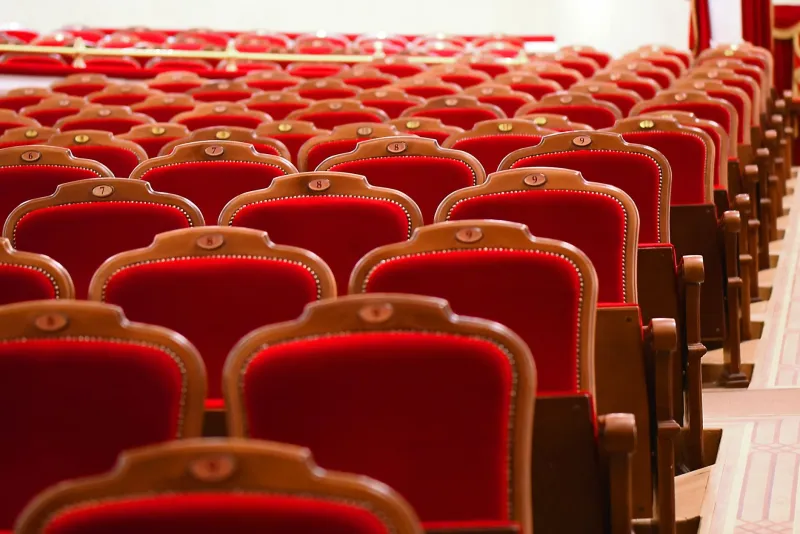
The Stage Within the Estate
There is a particular kind of ambition that cannot be satisfied by a season subscription, however exclusive. For a select and growing cohort of America's most culturally invested collectors, the finest concert halls and opera houses — however storied their reputations — have come to represent a compromise. Programming committees answer to broad audiences. Budgets bow to commercial pressures. And the genuinely obscure, the irreplaceable, the dangerously unfamiliar is quietly shelved in favor of works guaranteed to fill seats.
The response among a certain class of patron has been quietly radical: build your own stage.
Across the country, from the Hudson Valley to the Pebble Beach coastline, a discreet architectural movement is taking shape beneath the rooflines of private estates. These are not screening rooms repurposed with velvet curtains. They are fully realized performance spaces — acoustically engineered, technically sophisticated, and designed in close collaboration with some of the most distinguished architects and acousticians working today. Their purpose is singular: to bring back what the mainstream has forgotten.
What the Mainstream Left Behind
The repertoire of neglect is, paradoxically, vast. Baroque operas composed for the intimate courts of seventeenth-century Europe. Chamber works that require ensembles too small to fill a Lincoln Center stage and too specialized to justify a touring budget. Early twentieth-century theatrical pieces, suppressed by politics or simply overtaken by fashion, that have not been performed in decades. For collectors who have spent lifetimes cultivating expertise — who know the difference between a Cavalli and a Cesti, or who can speak with authority about the lost theatrical tradition of American poetic drama — the absence of these works from public life is not merely unfortunate. It is a form of cultural erasure.
"There are pieces I have loved for thirty years that I have never heard performed live," said one collector who recently completed a forty-seat theater beneath the gardens of his Connecticut estate. "At a certain point, you stop waiting for someone else to decide they matter."
That decision — to stop waiting — is the animating force behind this movement. And the ecosystem required to act upon it is more sophisticated, and more collaborative, than it might appear.
The Architecture of Intimacy
Building a private performance space worthy of serious music and theater is, by any measure, an extraordinary undertaking. The architects commissioned for these projects speak of challenges that have no parallel in residential design. Acoustic isolation must be achieved without compromising the aesthetic character of the surrounding home. Stage dimensions must be calculated to suit specific repertoire — a space designed for Baroque chamber opera will require different sightlines and proportions than one intended for early American theatrical works. And the mechanical infrastructure supporting lighting, rigging, and sound must be concealed within interiors that are, first and foremost, expressions of refined personal taste.
Several firms have emerged as quiet specialists in this niche, developing proprietary approaches to what one architect described as "the theater that does not announce itself." Materials are chosen not only for acoustic performance but for visual warmth — hand-applied plasters, reclaimed hardwoods, custom millwork that references historical precedent without resorting to pastiche. The goal, consistently, is a space that feels inevitable rather than constructed.
"The room has to earn the music," said one New York-based acoustician who has consulted on three such projects in the past four years. "If the architecture is fighting for attention, you've already lost."
Assembling the Collaborators
The architecture, however magnificent, is only the beginning. Staging a forgotten Venetian opera or a neglected American theatrical work requires a particular kind of artistic courage — and a particular kind of artist willing to exercise it. Directors who specialize in early music theater, conductors with deep archival knowledge, and singers trained in historical performance practice form the core of a small but formidable talent pool that these patrons have learned to cultivate.
The relationships tend to be long-term and genuinely reciprocal. Patrons fund research, support rehearsal periods that commercial productions could never sustain, and provide artists with something increasingly rare in the professional performing arts: the freedom to pursue the work itself, without the pressure of ticket sales or critical consensus. In exchange, they receive productions of extraordinary depth — performances shaped by months of preparation rather than weeks, in spaces where every seat offers an experience that no public venue could replicate.
Composers, too, are finding a place in this world. Several patrons have commissioned new works specifically designed for their spaces — pieces that engage with historical forms, that respond to the acoustic character of a particular room, or that complete unfinished works left behind by composers history has underserved.
Culture as Conviction
What distinguishes this movement from simple indulgence is the seriousness of its intentions. These are not vanity productions staged for the approval of weekend guests. Many performances are attended by invitation-only audiences of scholars, fellow collectors, and artists — gatherings where the conversation before and after the curtain is as substantive as the performance itself. Documentation, in the form of archival recordings and scholarly notes, is treated with the same care as the productions.
Several patrons have established informal partnerships with universities and conservatories, sharing research materials and, in some cases, inviting graduate students to observe rehearsals. The private theater, in these instances, functions as something closer to a laboratory than a salon — a place where cultural memory is not merely preserved but actively examined.
The broader implication is significant. As public arts institutions face mounting financial pressures and the inevitable conservatism that accompanies them, the private patron — armed with resources, expertise, and genuine conviction — may be emerging as the most reliable guardian of the repertoire that falls between the cracks. It is a role that America's great cultural philanthropists once played on a public stage. Today, it is being reprised, quietly and deliberately, behind some very beautiful closed doors.