Arriving Quietly: How the Most Powerful Figures in America Have Made Invisibility the New Grand Entrance
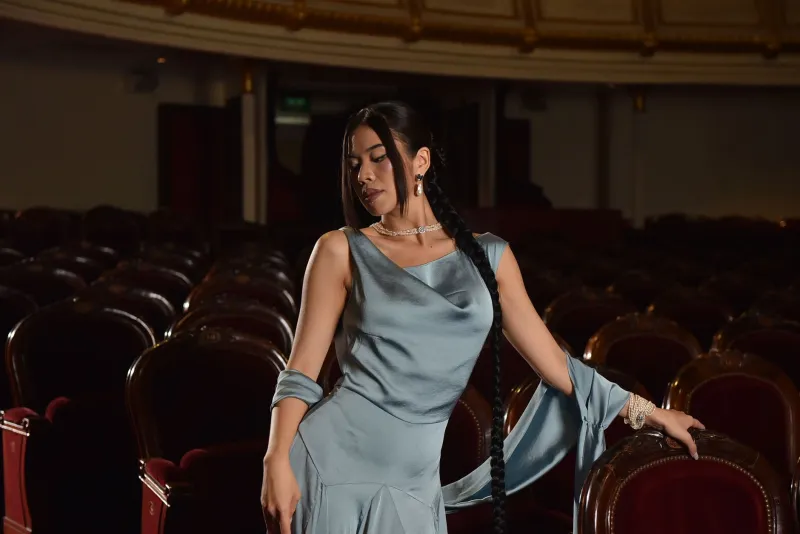
There was a time, not so long ago, when the grand entrance was the defining currency of American social ambition. Limousines idled at velvet ropes. Photographers jostled for position. Names were announced with theatrical flourish. To be seen arriving was to be seen at all.
That era is receding—deliberately, and by design.
Across the charity galas of Manhattan, the auction previews of Los Angeles, and the intimate gatherings that populate the Hamptons social calendar, a fundamental shift in arrival etiquette has taken hold among the nation's most quietly powerful individuals. The new measure of social authority is not how conspicuously one enters a room, but how effortlessly one is already within it.
The Psychology of Presence Without Performance
Behavioral researchers who study elite social dynamics have long observed that genuine authority rarely requires announcement. The performance of importance—the orchestrated delay, the deliberate late arrival designed to turn heads—has come to signal precisely what it seeks to conceal: insecurity about one's standing.
For those whose influence is genuinely beyond question, the calculus has inverted. To arrive without ceremony is to communicate that no ceremony is required. It is a form of social confidence so complete that it dispenses with the apparatus of confidence entirely.
This psychological undercurrent is not lost on those who move within the country's most exclusive circles. A prominent New York-based event architect who has designed gatherings for some of the most recognizable names in American philanthropy describes a pattern she has observed with increasing frequency: "The guests who command the most genuine deference are almost always already present when others arrive. They've been in quiet conversation for twenty minutes before anyone notices. That's not an accident."
The Architecture of the Understated Arrival
What appears effortless is, in many cases, carefully considered. The understated entrance at a high-stakes social event involves a sophisticated choreography of its own—one that prioritizes texture over spectacle.
For those who have perfected it, the approach typically involves arriving during what event professionals call the "soft window"—early enough to settle into the environment before the social temperature rises, but not so early as to appear eager. Attire is chosen for its quality of understatement: materials and tailoring that reward close inspection rather than distance. Jewelry, if worn, tends toward the singular and meaningful rather than the abundant.
The greeting, too, is recalibrated. Rather than working a room in the traditional sense—the circuit of handshakes, the performance of recognition—the most assured guests allow the room to come to them. They establish themselves in a location of their choosing, engage in genuine conversation, and permit the social geometry of the evening to organize itself around their stillness.
When the Exit Becomes the Statement
Perhaps the most telling evolution in elite arrival etiquette is the growing attention paid to departure. If the entrance has been deliberately muted, the exit carries the weight of the evening's social meaning.
Leaving early—and doing so without announcement—has become a recognizable signature of those who consider their time the scarcest commodity in the room. The quiet disappearance, sometimes called the "Irish exit" in more casual contexts, has been elevated into something approaching an art form at the upper reaches of American social life. There are no prolonged farewells, no rounds of air kisses that extend for twenty minutes past intention. One is present; then, gracefully, one is not.
This approach communicates something that no grand entrance ever could: that the evening was worthwhile on its own terms, not as a venue for display.
A Generational Inflection Point
The shift is also, in part, generational. The inheritors of significant American fortunes—those who came of age watching the performative excess of the 1980s and 1990s social scene—have largely rejected its aesthetic vocabulary. Having grown up with wealth rather than having acquired it, many feel no compulsion to announce what has always been simply present.
This cohort is also acutely aware of the scrutiny that conspicuous display invites in the current cultural climate. In an era of social media documentation and compressed news cycles, the most sophisticated strategy is often simply to be undocumentable—to pass through an evening's most significant moments without generating a single shareable image.
The Rooms That Remember
Ultimately, the understated entrance is a bet on a particular kind of memory. The guest who arrives without fanfare trusts that the quality of their presence—their conversation, their attention, their judgment—will outlast the evening in the minds of those who matter most.
It is a wager that requires genuine substance to back it. One cannot simply disappear the apparatus of arrival and expect the room to fill the void with admiration. The quiet entrance works only when the person making it has something real to offer once they are inside.
In this sense, the trend reveals something deeper than a shift in etiquette. It reflects a growing consensus among America's most discerning social actors that the performance of influence has become the surest sign of its absence—and that the most commanding thing one can do, upon entering any room, is to make it appear as though one has always, quietly, belonged.