The Second Life: How America's Most Discerning Collectors Are Transforming Their Greatest Treasures Into Enduring Legacies
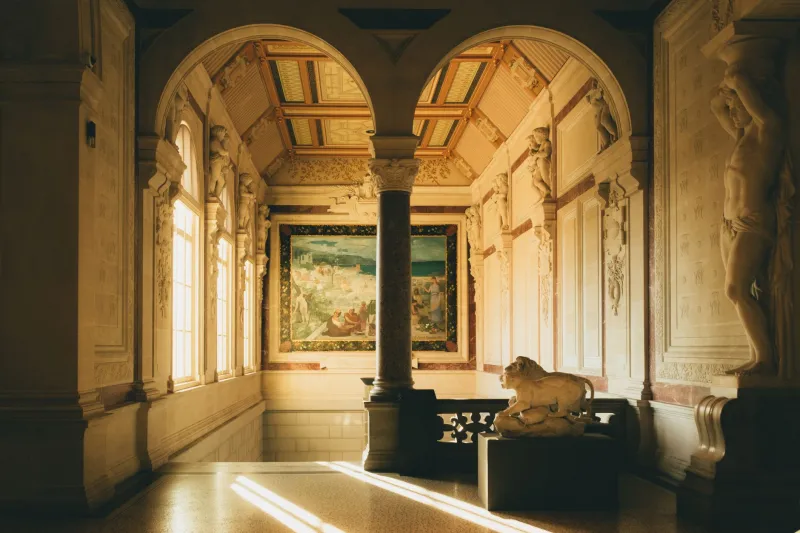
For decades, the prevailing mythology of the serious American collector was one of perpetual motion — the next acquisition always more luminous than the last, the auction paddle raised again and again in pursuit of something newer, rarer, more elusive. Walls filled. Cellars deepened. Wardrobes expanded. The measure of taste, it seemed, was always the freshness of the chase.
That mythology is undergoing a quiet but profound revision.
Among the most discerning collectors in the United States today — those whose eye for beauty is matched only by their capacity for patience — a different philosophy has taken root. Call it the art of the encore. Rather than chasing perpetual novelty, these individuals are turning their considerable intelligence and resources toward something more nuanced: the thoughtful extension, transformation, and reintroduction of what they already hold most dear.
A Shift From Acquisition to Stewardship
The distinction between a collector and a steward may seem subtle, but those who move in these circles understand it as fundamental. A collector accumulates. A steward inherits, tends, and ultimately passes something forward — ideally in better condition, and certainly with deeper meaning, than when it arrived.
This shift is visible across virtually every collecting discipline. In the world of fine art, prominent American collectors are increasingly commissioning conservation specialists — not merely to preserve works, but to restore them to a vitality that allows them to be exhibited, loaned, and experienced anew. Several notable private collections along the East Coast have quietly partnered with museum-grade conservators to undertake multi-year restoration projects on works that had spent decades in climate-controlled storage, never seen by anyone beyond the collector's immediate household. The act of bringing a painting back into the light, these collectors suggest, is itself a form of curation.
In the realm of haute couture, a similar sensibility is reshaping how America's most fashionable women regard their wardrobes. Rather than treating a Balenciaga archive piece or a storied Chanel suit as a static relic, forward-thinking collectors are engaging master atelier craftspeople to restore, reline, and occasionally reimagine these garments — giving them a second chapter on the social stage. The result is not merely a repaired dress, but a conversation piece: an object that carries visible history while remaining fully present.
The Cellar as Chronicle
Perhaps nowhere is this philosophy more elegantly expressed than in the world of rare wine. America's most serious collectors have long understood that a great bottle is not a trophy to be hoarded but a living thing to be shepherded toward its moment of fullest expression. The question that now animates the most sophisticated cellars is not simply when to open a bottle, but how to create the conditions — the setting, the company, the occasion — worthy of what the wine has become.
Some collectors have begun commissioning dedicated wine directors to audit their cellars not for value, but for narrative. Which bottles tell a story? Which vintages mark a personal epoch — a marriage year, a child's birth, a business milestone? Rather than selling off aging inventory at auction, these collectors are orchestrating what might be called legacy dinners: intimate, meticulously planned evenings built entirely around a single wine's biography, with guests chosen as much for their capacity to appreciate the moment as for their social standing.
The wine is not merely poured. It is reintroduced.
Restoration as Refinement
The philosophical underpinning of this movement draws from a tradition far older than contemporary collecting culture. The Japanese concept of kintsugi — the practice of repairing broken pottery with gold, treating the fracture as part of the object's beauty rather than a flaw to be hidden — has found unexpected resonance among American collectors who have grown weary of the pristine and the untouched. There is, they suggest, a particular elegance in an object that bears the evidence of a life well-lived and carefully tended.
This sensibility extends to architecture and interior design. Across the country, affluent homeowners who might once have commissioned entirely new estates are instead undertaking meticulous restorations of historic properties — not as preservation exercises, but as acts of creative stewardship. The goal is not to freeze a house in amber, but to bring it into dialogue with the present: preserving what is irreplaceable while gently accommodating contemporary life.
In these spaces, the furniture, the objects, the art are rarely new. They are, instead, deeply known — each piece with a provenance, a story, a reason for being exactly where it is.
The Environmental Dimension
It would be disingenuous to discuss this movement without acknowledging the environmental consciousness that increasingly informs it. Among younger ultra-high-net-worth Americans in particular — those who have inherited significant wealth or built it during an era of acute climate awareness — the ethics of consumption are never entirely absent from the calculus of collecting.
To restore rather than replace, to repurpose rather than discard, to extend a lifecycle rather than shorten it: these choices carry moral weight that is not lost on a generation that has grown up understanding the environmental cost of luxury at scale. The most sophisticated among them have found a way to hold both truths simultaneously — that beauty matters, that objects of extraordinary quality deserve to be treasured, and that the truest luxury is one that does not require the world to be diminished in its pursuit.
Legacy Over Inventory
What ultimately distinguishes the collectors who are mastering the art of the encore is their orientation toward time. Where the perpetual acquirer is always moving forward — always toward the next thing — the steward-collector moves in multiple directions at once, tending to the past, inhabiting the present, and thinking carefully about what will remain.
There is something deeply civilized about this posture. It suggests a confidence that does not require constant novelty for its expression, a taste secure enough to find its fullest articulation not in the newest acquisition but in the most considered one. The greatest collections, these individuals understand, are not inventories. They are chronicles — of a life, a sensibility, a set of values made visible through the objects one has chosen to love and to keep.
In the end, the art of the encore may be the most sophisticated collecting discipline of all: the patient, purposeful work of ensuring that what is most beautiful does not merely persist, but endures.