Hidden in Plain Sight: How the World's Most Prestigious Venues Are Making Exclusivity Disappear Into the Architecture
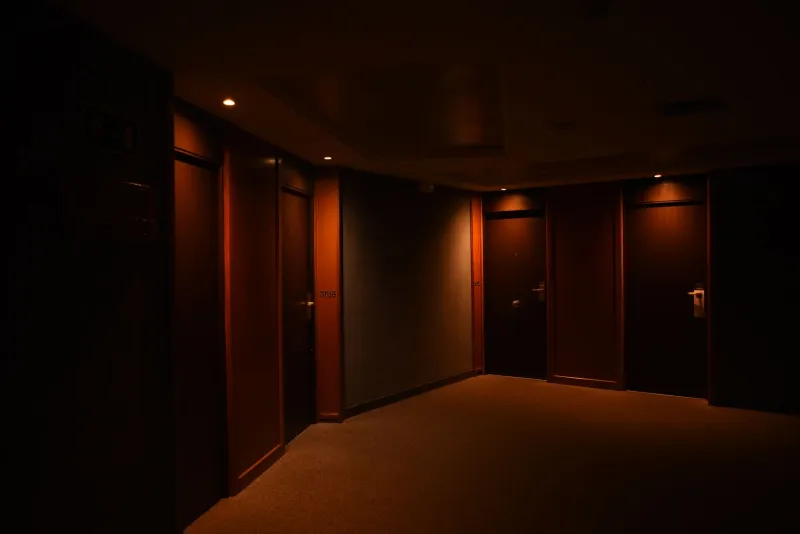
There was a time, not so long ago, when the entrance to a great American hotel was itself a performance. Broad marble steps, uniformed attendants stationed like sentinels, a canopy stretching to the curb as though the building itself were reaching out to receive you—these were the grammar of luxury hospitality, the visual language through which a property announced its own magnificence. The grander the threshold, the louder the claim.
That era, for those who move within the uppermost registers of American social life, is quietly drawing to a close.
In its place, a different philosophy has taken root—one built not on proclamation but on concealment, not on spectacle but on the deliberate suppression of it. The most coveted addresses in contemporary luxury hospitality have begun to treat their entrances not as marquees but as riddles. A door set flush with a limestone façade. A corridor that begins behind an unmarked panel in a hotel lobby. A restaurant accessible only through a passage most guests will never notice, let alone use. To know where the door is, it turns out, is the whole point.
The Architecture of Belonging
This shift is neither accidental nor merely aesthetic. It reflects a sophisticated understanding of how exclusivity actually functions among affluent Americans who have, for the most part, grown weary of its more obvious performances. When luxury is defined by what can be seen—by the height of the ceiling, the weight of the chandelier, the breadth of the porte-cochère—it remains, in principle, accessible to anyone with sufficient funds and a reservation. Knowledge, by contrast, cannot be purchased at the front desk.
The hidden entrance, then, operates as a form of social currency. It rewards those who have been brought into a venue's confidence by someone already inside. It creates a geography of belonging that maps precisely onto the social networks of its intended clientele. A first-time visitor who has been properly introduced knows exactly which elevator requires a particular key card, which dining room lies beyond the unmarked door at the end of the second-floor corridor, which garden entrance bypasses the public lobby entirely. That knowledge is itself a credential.
Several of New York City's most talked-about private dining establishments have, in recent years, dispensed with conventional street-level signage altogether. A building number, if it appears at all, is rendered in characters small enough to require deliberate searching. Some properties have gone further still, situating their primary access points not on main thoroughfares but on side streets, through service corridors that have been quietly transformed into something approaching the sublime—raw concrete giving way to warm lighting, industrial finishes softening into considered materiality.
Restraint as the Highest Form of Welcome
What is striking about this trend is how thoroughly it inverts the traditional hospitality calculus. The conventional logic of a grand hotel has always been one of generous revelation: everything offered, everything visible, the full scope of the experience presented to the arriving guest as a kind of gift. The new luxury logic moves in precisely the opposite direction. It withholds. It requires effort. It insists, gently but unmistakably, that the arriving guest already knows something.
This is not inhospitality—far from it. Those who have navigated these concealed thresholds consistently describe the experience as unexpectedly intimate, as though the venue has chosen to receive them rather than merely accommodate them. The architectural restraint communicates a form of respect: we assume you know us, and therefore we need not explain ourselves.
Some of the country's most lauded resort properties have extended this philosophy well beyond the entrance. Private villa compounds within larger resort campuses are accessible only through pathways unmarked on the maps distributed to general guests. Spa facilities reserved for a property's most valued clientele occupy floors that do not appear on standard elevator panels. The geography of the venue bifurcates into a public experience and a private one, with the membrane between them rendered as nearly invisible as possible.
The Social Knowledge Premium
What this architectural philosophy ultimately produces is something sociologists might recognize as a knowledge premium—a form of value that accrues not to wealth per se but to social positioning. A guest may arrive at a celebrated Manhattan property having secured the finest available suite; if they do not know about the private entrance on the side street, the members-only bar on the mezzanine level, or the chef's table accessible only through the kitchen corridor, they are, in a meaningful sense, experiencing a lesser version of the property. The full experience is reserved for those who have been told.
This dynamic serves the venues themselves in ways that extend beyond mere mystique. It creates natural advocates among those who possess the knowledge—guests who become, in effect, curators of the experience for those they choose to introduce. It establishes the venue as something closer to a private institution than a commercial enterprise. And it insulates the inner experience from the ambient noise of social media documentation, since those who know tend to understand that sharing diminishes.
The New American Grand Entrance
There is, in this movement, something that resonates with broader currents in American luxury culture—the same impulse that has driven the wealthiest consumers away from logo-heavy fashion, away from ostentatious automobile choices, away from the kind of conspicuous consumption that signals aspiration rather than arrival. The unmarked door is, in this sense, the architectural equivalent of the unbranded cashmere coat: its very absence of declaration is the declaration.
For those who design these spaces, the challenge is considerable. Restraint, executed poorly, reads as neglect. The concealed entrance must be concealed in a way that feels intentional, even inevitable—as though the building has simply declined to shout, rather than failed to speak. The materials must be considered, the lighting precise, the transition from the ordinary world to the interior experience managed with a care that more than compensates for the absence of grandeur.
When it is done well, however, the effect is remarkable. The guest who finds the door—who has been told where to look, who presses the unmarked buzzer or steps through the unmarked gate—arrives already inside something. The threshold has been crossed not just physically but socially. The venue has confirmed, through its very architecture, that this person belongs here.
In the most rarefied precincts of American hospitality, that confirmation may be the most luxurious thing a property can offer.