The Connoisseur in the Cellar: Inside the Rise of America's Most Coveted Private Sommeliers
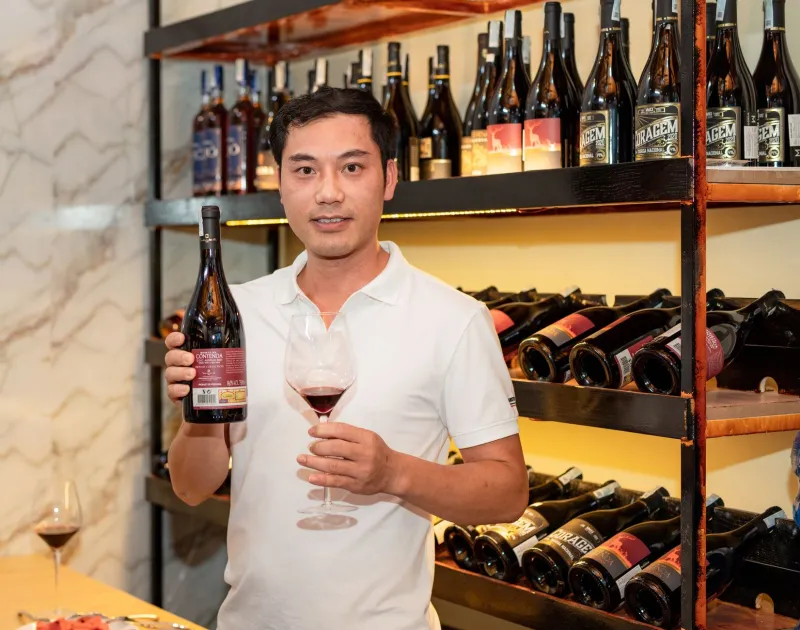
In the dining rooms and cellars of America's most discerning households, a quiet transformation has been unfolding. The sommelier—once a figure encountered exclusively in the world's finest restaurants, identified by a silver tastevin and an authoritative pour—has migrated into private life. Today, the most sought-after wine professionals in the country rarely set foot in a commercial dining room. Their offices, such as they are, exist within the temperature-controlled cellars and intimate dinner parties of clients whose collections can span six figures in bottles and seven figures in value.
The private sommelier has arrived. And for those who retain one, the relationship has become something far more layered than a simple advisory arrangement.
Beyond the Wine List
The conventional image of the sommelier as a guide through a restaurant's offerings undersells, dramatically, what the most accomplished private wine consultants actually do. At the level of ultra-high-net-worth clientele, the role encompasses a remarkable range of functions that extend well beyond the cellar.
A private sommelier working with a serious collector might spend a portion of their time attending pre-auction tastings at Christie's or Hart Davis Hart, evaluating lots with an eye toward both quality and investment trajectory. They may accompany clients to Burgundy during harvest to assess the vintage firsthand, cultivating relationships with domaines whose allocations are controlled and whose wines rarely reach the open market. They will advise on cellar construction and climate management, curate selections for private entertaining, and—perhaps most valuably—serve as a cultural interpreter, translating the often impenetrable language of wine criticism and regional tradition into terms that are meaningful to a client building a collection with both passion and purpose.
"The clients who retain private sommeliers are not people who need someone to tell them what to drink with dinner," observes one New York-based wine professional who works exclusively with private clients. "They're people who want a genuine intellectual partnership around something they love and take seriously. The wine is the medium, but the relationship is about trust, taste, and shared curiosity."
The Investment Dimension
It would be a mischaracterization to reduce the private sommelier's value to its investment dimension—genuine passion for viticulture is, almost universally, the foundation of the best client relationships in this space. Nevertheless, the financial significance of serious wine collecting is impossible to ignore, and the most sophisticated private consultants navigate it with fluency.
Fine wine has, over the past two decades, established itself as a recognized alternative asset class. The Liv-ex Fine Wine 1000 index—which tracks the performance of wines from the world's most prestigious regions—has demonstrated returns that have, in certain periods, compared favorably with more conventional investment vehicles. For collectors working at the highest levels, a cellar is simultaneously a source of pleasure, a social instrument, and a portfolio.
The private sommelier's role in managing this portfolio is nuanced. Unlike financial advisors operating within regulated frameworks, wine consultants bring a different kind of expertise: the sensory knowledge of what a wine actually tastes like at various stages of development, the regional relationships that provide access to allocations unavailable through commercial channels, and the historical perspective to evaluate how a given producer's trajectory has evolved over decades.
This combination of connoisseurship and market intelligence is, for serious collectors, genuinely irreplaceable.
Gatekeeping and Access
Perhaps the most coveted function the private sommelier performs is one that no amount of money alone can purchase: access. The world of fine wine at its most rarefied level is governed by relationships and reputation rather than by open markets. The most sought-after producers—certain Burgundian domaines, a handful of cult California producers, specific châteaux in Bordeaux—allocate their finest wines through networks of trust that have been built over years of demonstrated seriousness.
A private sommelier with genuine standing in these networks can open doors that remain firmly closed to the merely wealthy. The collector who retains the right advisor may find themselves receiving allocations of wines that do not appear on any list—bottles offered quietly to a handful of clients whose commitment to the producer's work has been proven over time.
This gatekeeping function extends, in some cases, to the social world as well. The sommelier who has cultivated relationships across the wine world can facilitate introductions—to producers, to fellow collectors, to the proprietors of estates that rarely receive visitors—that enrich a client's engagement with viticulture in ways that transcend the contents of any bottle.
Taste as Identity
For the clients who have embraced the private sommelier as a fixture of their household, the relationship ultimately serves a purpose that is as much about identity as it is about wine. In a social world where taste is among the most meaningful signals one can transmit, the capacity to speak with genuine authority about wine—to discuss a Chambolle-Musigny with the same fluency one brings to a Basquiat—carries real weight.
The private sommelier is, in this sense, a collaborator in the ongoing project of cultivating a sophisticated self. They do not merely manage a cellar; they help shape the aesthetic sensibility of the household they serve, influencing the character of dinner parties, the texture of private entertaining, and the quality of attention brought to one of the world's most complex and rewarding pleasures.
A Profession Quietly Transformed
The private sommelier market in the United States remains small, deliberately so. The most accomplished practitioners work with a limited number of clients—some as few as three or four—to preserve the depth of engagement that defines the relationship at its best. Retainers vary widely, but for the most sought-after consultants working with the most serious collectors, annual arrangements can reach well into six figures.
What clients receive in return is not simply expertise, but a form of devoted attention that the commercial world cannot provide. In the unhurried, trust-governed space of a private cellar, the conversation about wine becomes something richer: a sustained inquiry into pleasure, history, craft, and the particular satisfaction of knowing, with genuine precision, exactly what one loves and why.